
Conversations about what we do for a living are interesting.
Even more so, if you work in (what are considered) traditionally offbeat sectors. You get follow-up questions that make perfect sense to the person asking them, but not so much to you.
‘I am studying Humanities’. (‘Oh, so you couldn’t get through to an engineering college, is it?’)
‘I am an artist’. (‘Oh, so you are not working, is it?’)
‘I am a stay-at-home-parent’. (Oh, must be so relaxing right?’)
You get the drift!
Most of the time when I get asked what I do for a living, my response is – ‘I work in the impact sector’.
The immediate follow-up question in most cases is – ‘Oh, so you work in an NGO?’
If you work in the impact sector as well (especially in India), I am sure you would have heard this at some point too.
Just so you know, working in impact could mean having a technical, functional or project management role. It could be in a nonprofit, yes. But it could also be in a corporate, in an investment firm, in a Foundation, an educational institute and so on.
So, trying to explain what working in the impact space means – is an interesting experience, to say the least. There are several inherent biases, assumptions, and myths.
And saying it is an unusual career choice would be an understatement, especially in the world I come from.
My father spent a long career as a government employee with one of the largest public sector undertakings in the country. My husband’s parents did the same. Almost all our relatives – from the previous generation – worked in public sector organizations as well. The ones who didn’t, were teachers in public schools.
When I was a kid, I wanted to grow up and be a book (yes, you read that right!).
And for the next few years, like most Indian kids of our generation, I wanted to be a doctor.
I discovered only later that working for the environment need not be a just a hobby and could be an actual career. And there was no looking back since!
Why We Need To Think Differently About Leadership
So anyway, I didn’t really plan what I was getting into when I stumbled into working in the impact space. Over the years, I have had a great time experimenting with different roles, functions, and organizations working on purpose-driven projects.
And, best of all, I have had the good fortune of working with fantastic purpose-driven individuals. From social entrepreneurs to nonprofit leaders, impact investors to donors – the list is long.
So why I am telling you this!
I genuinely believe that leadership in the years to come would need to look very different.
Thinking about lenses of sustainability, impact, and equity in work would no longer be optional for the next-generation leaders. Within organizations and teams, lenses of diversity, empathy, and compassion would be non-negotiable for leaders to drive retain talent and drive high.
Let me tell you why.
Resources on our planet are finite and constrained. The chasm of inequity is widening. Pandemic and natural calamities are forcing us to change the ways we work and think about businesses. And these drivers are not alone.
Information has made the world available at our fingertips. Citizens are becoming aware and more importantly, demanding more. Technology is literally changing how we live, work and breathe.
We are at the cusp of a paradigm shift, where leaders would eventually need to shape up or ship out.
So, here are my two cents about what a next-generation leader could look like –
1. Someone who is 𝐩𝐮𝐫𝐩𝐨𝐬𝐞-𝐝𝐫𝐢𝐯𝐞𝐧 – thinks about the one big problem their product/solution/team is solving, and orients all goals towards them (while considering the short and long term impacts) 👉
2. Someone with a 𝐝𝐫𝐚𝐠𝐨𝐧𝐟𝐥𝐲 𝐥𝐞𝐧𝐬 – focuses on profits and topline, but also thinks about equity, diversity, and impact 👀
3. Someone with 𝐞𝐦𝐩𝐚𝐭𝐡𝐲 – focuses on driving results without compromising relationships, knows how to lead teams from the front as well as back 🤝
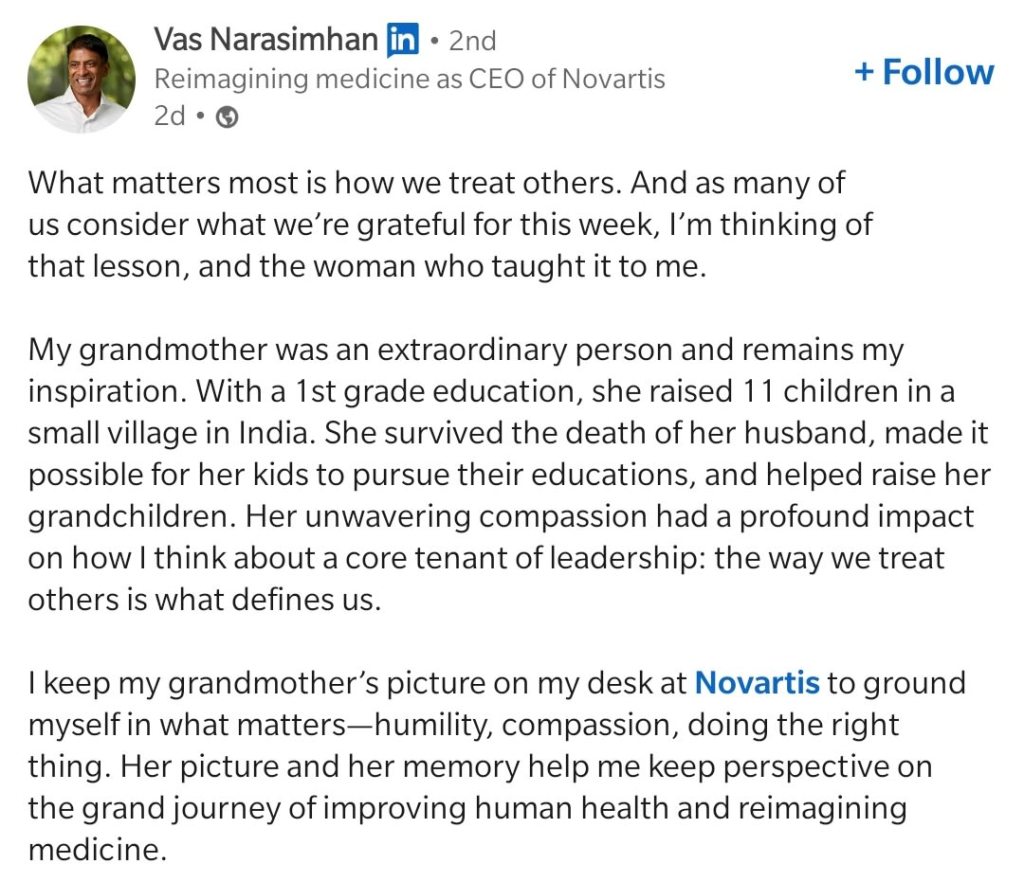
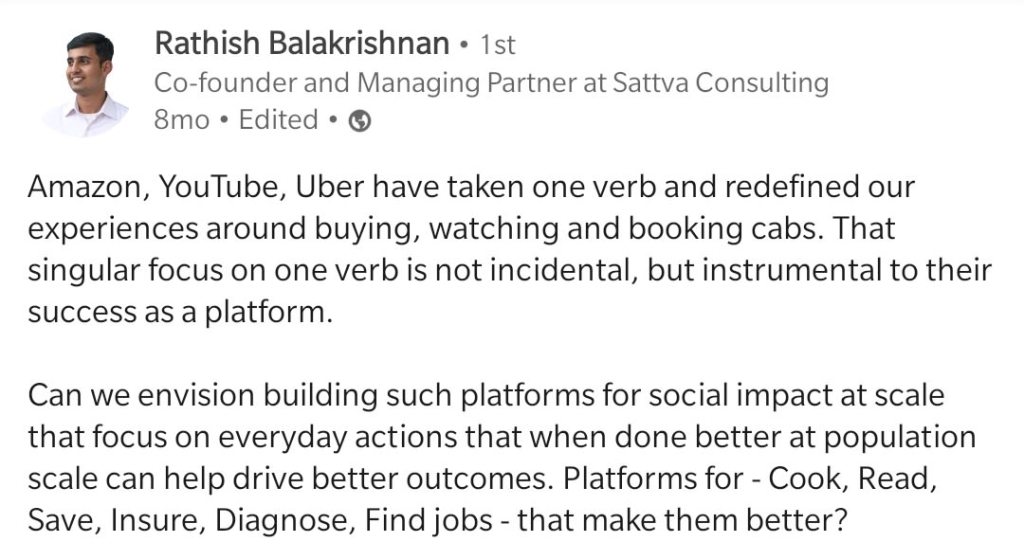
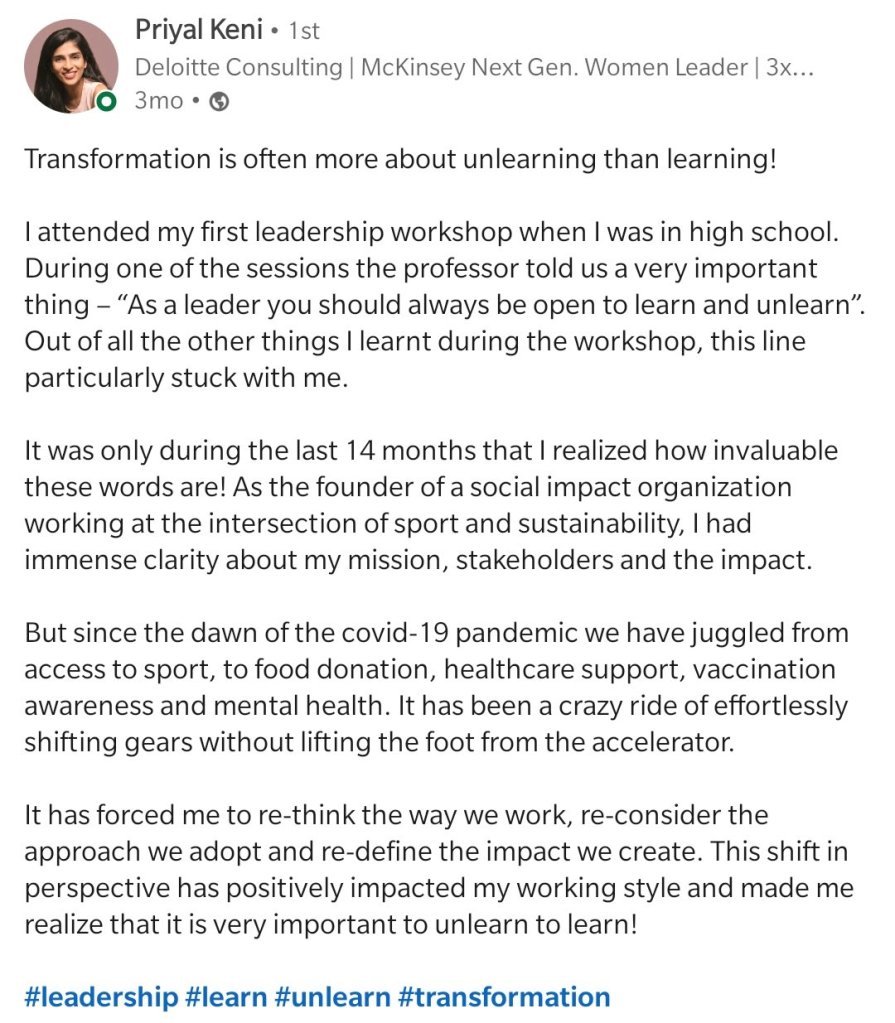
As examples, here are some new age purpose-driven leaders, sharing their thought shots –

What to Expect When Working With an Impact Lens?
Here are my top learnings from having worked in the impact space for close to 15 years-
1. Working in impact means working on hard development challenges and taking a purpose-driven lens for action. Understanding the context of the problem is always more important than years of experience or qualifications. It helps you learn empathy and patience (to see outcomes in the long run), as well as the ability to unlearn and relearn from the lens of the beneficiary (for whom you are trying to create benefit).
2. Many of the impact-focused organizations are also equally competitive, fast-paced, driven, and effective. I have worked with experts in data, research, marketing, strategy, and many others. And many of the most fabulous people I have worked with had actually crossed over into the impact space from mainstream corporate careers.
3. We need to stop thinking about impact as a separate good-to-have sector. In fact, increasingly thinking about impact is becoming embedded in the way companies function. In fact, considering primary and secondary impact (whether in manufacturing, retail, energy, and many other sectors) is no longer optional. Taking lenses of sustainability, equity, diversity are becoming a part of the way we work.
And if you too are considering taking a leap into the impact sector, then remember –
1. 𝐘𝐨𝐮 𝐰𝐢𝐥𝐥 𝐡𝐚𝐯𝐞 𝐭𝐨 𝐟𝐢𝐧𝐝 𝐲𝐨𝐮𝐫 𝐨𝐰𝐧 𝐣𝐨𝐮𝐫𝐧𝐞𝐲. Just because someone you know is a development consultant, social entrepreneur, or impact investor – doesn’t mean you have to do the same. Find your own way!✊
2. 𝐁𝐞 𝐨𝐩𝐞𝐧 𝐭𝐨 𝐬𝐭𝐞𝐩𝐩𝐢𝐧𝐠 𝐬𝐢𝐝𝐞𝐰𝐚𝐲𝐬. Sometimes the best way to take the leap in the impact sector is to experience it. Join a Fellowship, take a sabbatical to explore, do internships, volunteer, discuss with experts. Figure out if this path is for you before jumping!🛤️
3. 𝐃𝐨𝐧𝐭 𝐥𝐨𝐬𝐞 𝐬𝐢𝐠𝐡𝐭 𝐨𝐟 𝐲𝐨𝐮𝐫𝐬𝐞𝐥𝐟. You may be already good at what you do – in data, research, marketing, communications. You don’t have to start afresh. Leverage your own personal skillset while trying to find a fit!💪
This piece was originally published in my newsletter ThoughtShot.

Hi – I am Roselin! I work on issues of sustainable development, innovation, and impact – and I absolutely love it. I also love being a mom to an adorable three-year-old. When I am not juggling PowerPoints and parenting, I enjoy being a librocubicularist and moonlight as a writer.
To read about leadership and all-things-impact, sign up for my newsletter. It’s free and will land straight in your inbox.

 roselinminj.com